
01
There was a significant hail or wind event in your area.
Even if you can't see obvious damage from the ground, hail impact and high winds can compromise roofing materials in ways that only show up on a close inspection.
Storm damage restoration · Greater St. Louis Region
Storm Damage Restoration
Hail, wind, and storm debris can leave damage that isn't obvious from the ground. Some of it doesn't show up inside your home until weeks later. Oxford comes out, gets on the roof, and documents exactly what the storm left behind. That record protects you whether you're filing an insurance claim or just deciding what comes next.
When storm damage restoration is appropriate
You don't have to be certain there's damage to call. If any of these apply after a storm, it's worth getting eyes on the roof before assuming everything is fine or assuming the worst.
Even if you can't see obvious damage from the ground, hail impact and high winds can compromise roofing materials in ways that only show up on a close inspection.
Missing shingles, bent flashing, visible granule loss, and damaged vents or gutters are all worth documenting after a storm.
If a leak or water stain appeared after a storm, the storm is the likely starting point. The roof needs to be reviewed before the connection can be confirmed.
Whether you're filing an insurance claim or simply deciding how to respond, a written record of the roof's post-storm condition is the right first step.
How Oxford Handles Storm Work
Before any decisions are made, we record the post-storm condition with photographs, affected areas, and visible findings. That creates a clear, dated record of what the storm left behind.
Not every part of a roof takes impact the same way. We identify which areas, components, and transitions were affected and document each one clearly.
The documented condition drives the proposal. Not assumptions. Not pressure. Not what a contractor thinks your insurance will cover.
Storm restoration details
Every storm restoration project is documented in the same thorough sequence. Here's what that includes:
Storm restoration and insurance claims assistance are separate services at Oxford. The assessment documents visible roof conditions. Coverage decisions belong to your insurer.
How It Works
We get on your roof and look at everything, starting with the areas most likely to show impact and working through the full system. You'll know what we found.
We photograph and record every affected area, component by component. This record follows the project and can be used if you're working with an insurance adjuster.
We put together a written restoration plan based entirely on what we documented. Materials, affected areas, and the project sequence are in writing before any work is approved.
We complete the approved restoration work, clean up the property, and walk through the finished result with you. Documentation is provided when the project closes.
From the Field
Residential · Storm Damage Restoration
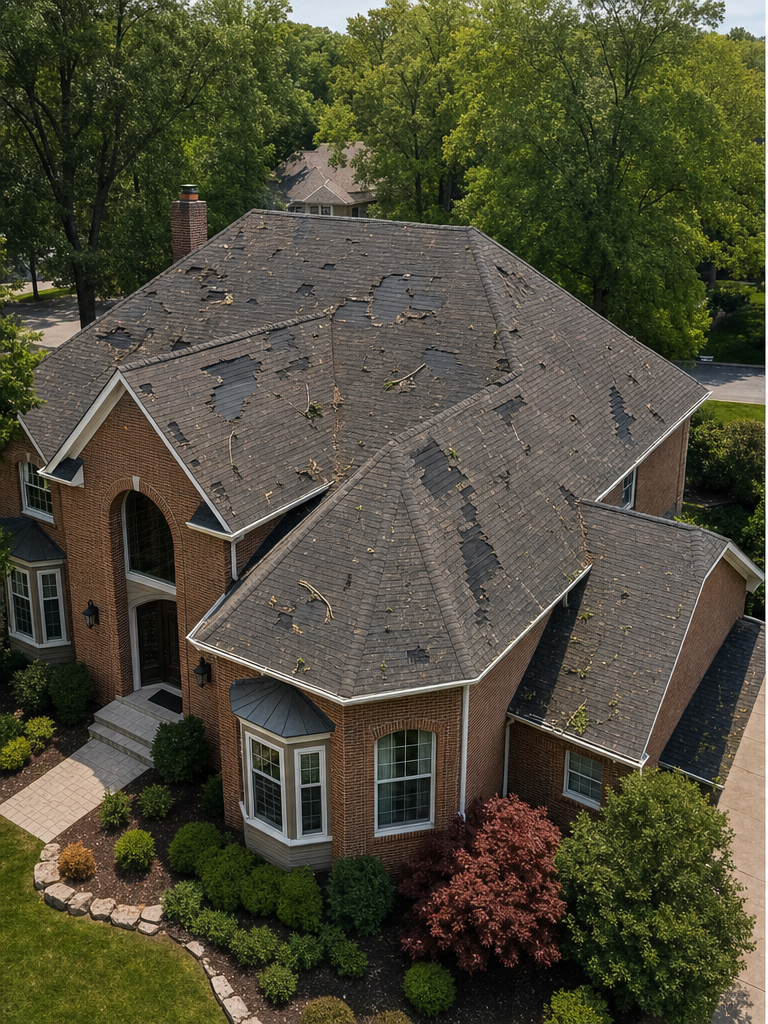
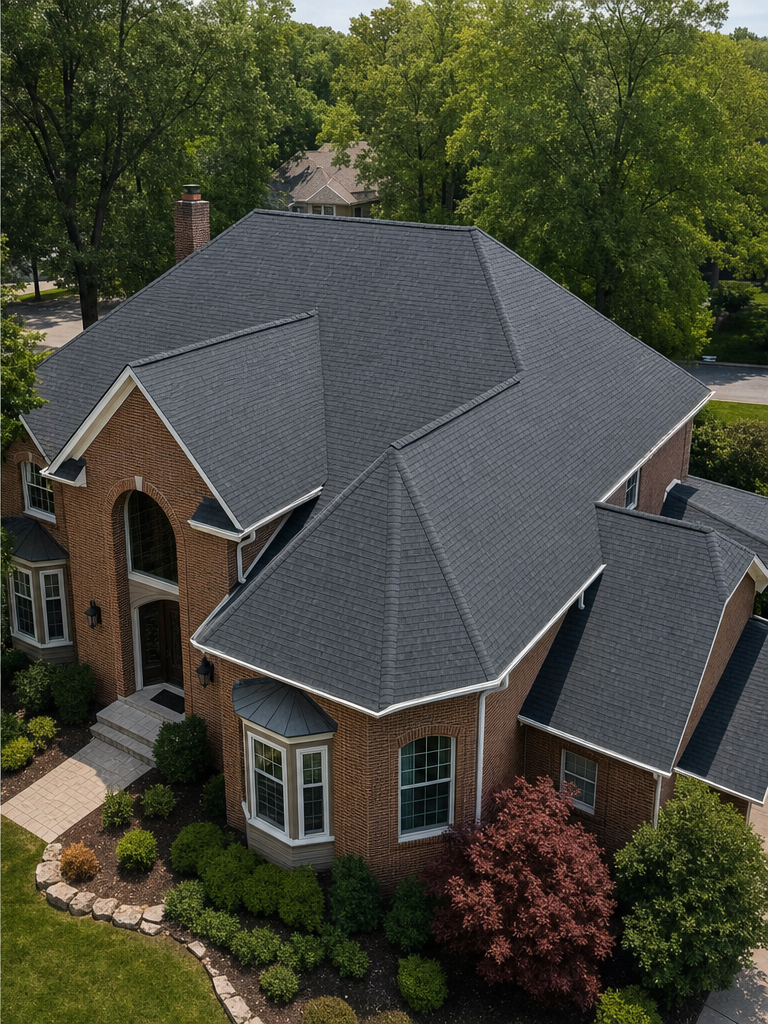
A hail event left visible impact across the roof surface. Oxford documented the post-storm condition, defined the restoration work, and completed the project in Chesterfield. Before and after photography on file.
View ProjectComplete Oxford service territory
Oxford’s approved territory includes the following Missouri and Illinois communities.
Missouri
Missouri
Missouri
Missouri
Missouri
Missouri
Illinois
Illinois
Illinois
Our service area is always growing. If you’re in or near the greater St. Louis region, there’s a good chance Oxford Roofing can help. Contact us and we’ll confirm whether your property is within our current service area.
Storm damage restoration FAQ
Hail impact shows up as granule loss, bruising or cracking on shingles, and dents on metal components such as vents, gutters, and flashing. Wind damage often means lifted, creased, or missing shingles, especially at ridges and edges. Debris damage depends on what hit and where. Not all of it is visible from the ground, which is why a proper inspection matters.
No. Any contractor who tells you otherwise is overpromising. Oxford documents the visible post-storm condition of your roof. What your policy covers is your insurer's call, not ours. We give you a thorough, accurate record of what we found. That is the most useful thing you can bring to the conversation.
It depends on how widespread the damage is. Isolated impact in one or two areas may call for a targeted repair. When damage is distributed across multiple roof planes, the ridge, flashing, and penetrations, a full restoration is usually the more honest answer. Oxford will tell you which one fits after we've inspected your roof and documented what's there.
Oxford offers Insurance Claims Assistance as a separate service. That process involves working alongside you and your insurer, but it is distinct from the storm assessment and restoration work itself. If you're filing a claim, ask us about it when you schedule your inspection.
At minimum: dated condition photography from the inspection, a written restoration proposal tied to the documented findings, and completion records when the project closes. If you're working with an insurance adjuster, the inspection documentation is what you'll want to have in hand.
Begin with the visible condition
After a storm, the worst thing you can do is wait and hope nothing comes of it. Oxford will come out, inspect the full roof, and give you a clear picture of what the storm actually did. No assumptions. No pressure. Just an honest assessment you can act on.
Schedule a Storm Assessment